【Law vs. Medicine】Legal Lecture – Legal Risks Every Primary Care Physician Should Know
Overview
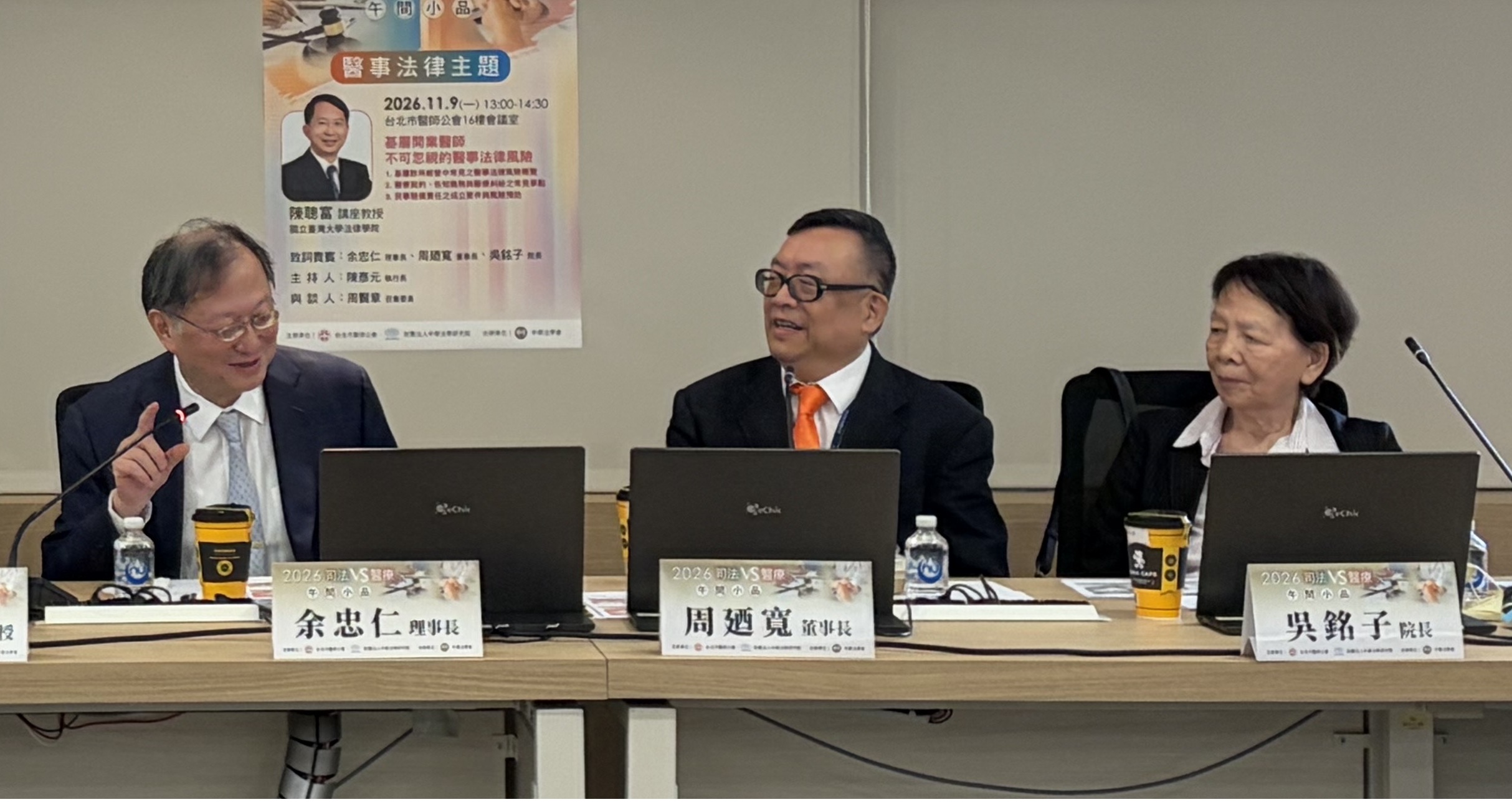
On November 9, 2026, the Taipei Medical Association and the Chung-Hua Institution for Legal Research (the Foundation) held the fourth medical-law seminar in the "Law vs. Medicine" lunchtime series. The Foundation is sincerely grateful to the Chinese Society of Law for its support as co-organizer. This seminar was also the final session of the 2026 series.
The topic was "Legal Risks Every Primary Care Physician Should Know." Distinguished Chair Professor Chen Tsung-Fu of the College of Law, National Taiwan University, was invited as the speaker. The Foundation was deeply honored that Dr. Chou Hsien-Chang, Executive Director of the Taipei Medical Association and Convener of its Primary Care Committee, graciously agreed to serve as discussant. The moderator was Dr. Chou Nai-Kuan, Chairman of the Foundation, serving in his capacity as Convener of the Taipei Medical Association's Medical Affairs and Legal System Committee.
Seeing patients, filing claims and managing a clinic can all involve legal issues for primary care physicians. Covering AI in medicine, outsourced testing and staffing, informed consent and National Health Insurance (NHI) claims, the seminar introduced participants to the legal risks commonly found in medical practice.
The key points are summarized below. Members of the two organizing bodies are welcome to consult the full handouts and video recording.
Opening Remarks
Dr. Chou Nai-Kuan, Chairman of the Foundation, opened with remarks expressing his hope for continued exchange between the medical and legal communities. Dr. Yu Chong-Jen, President of the Taipei Medical Association, noted that medical practice is becoming increasingly diverse and that practitioners greatly need concrete advice from legal experts. Dr. Yu also congratulated Professor Chen Tsung-Fu on his recent appointment to the National Chair Professorship. Wu Ming-Tzu, President of the Foundation, expressed her hope that participants would gain practical medical and legal knowledge in a relaxed setting.
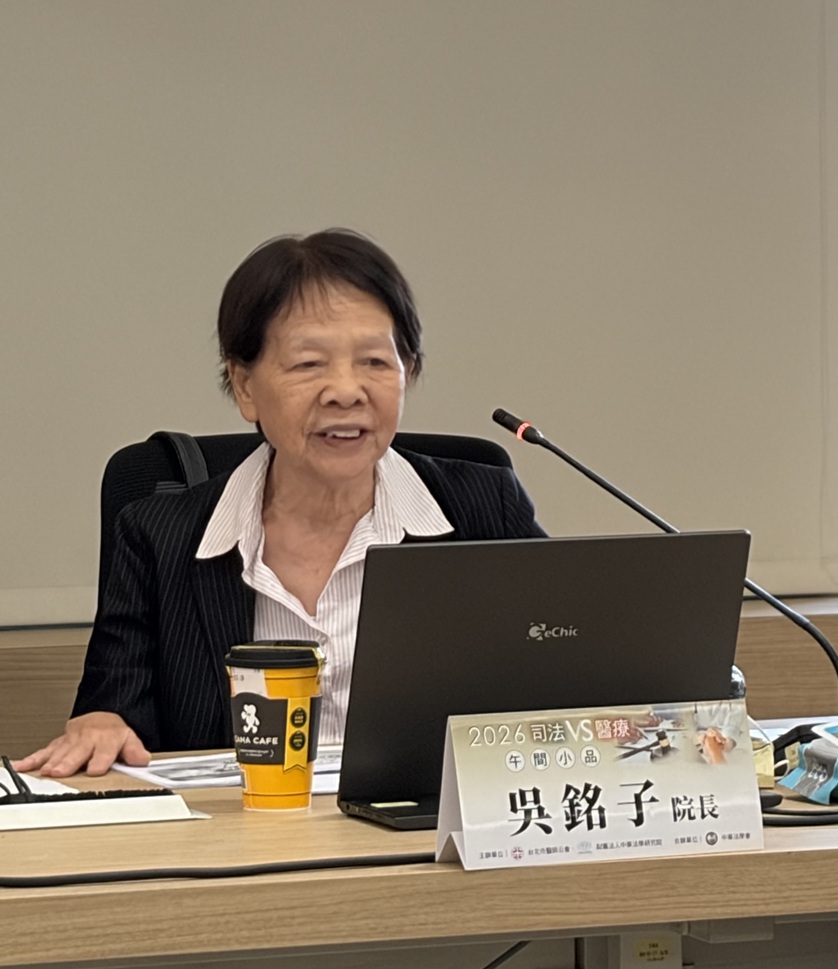
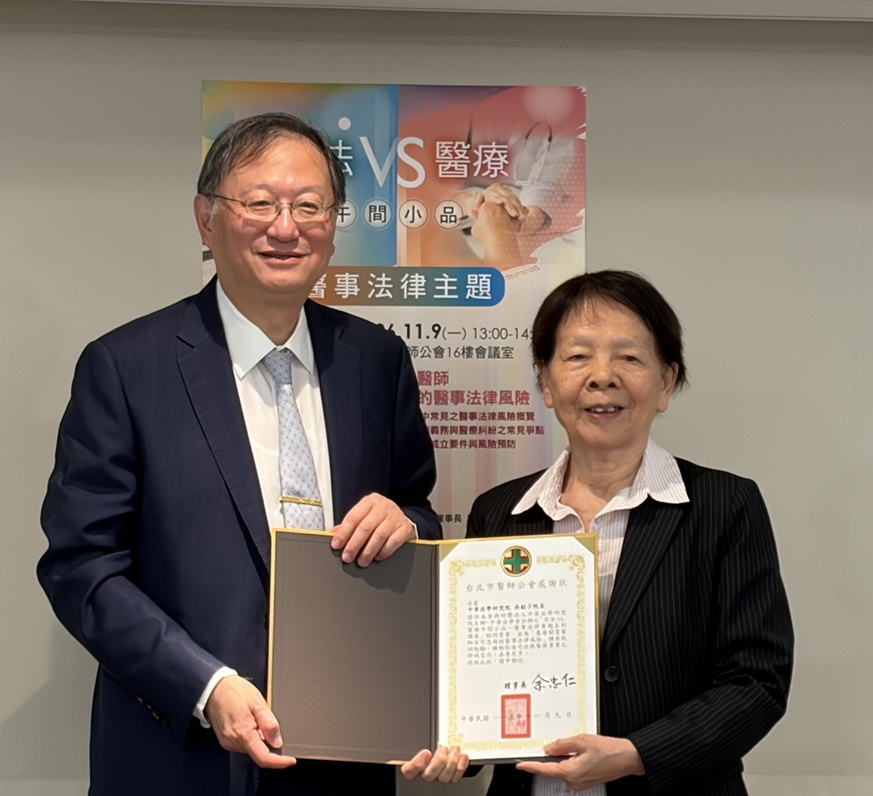
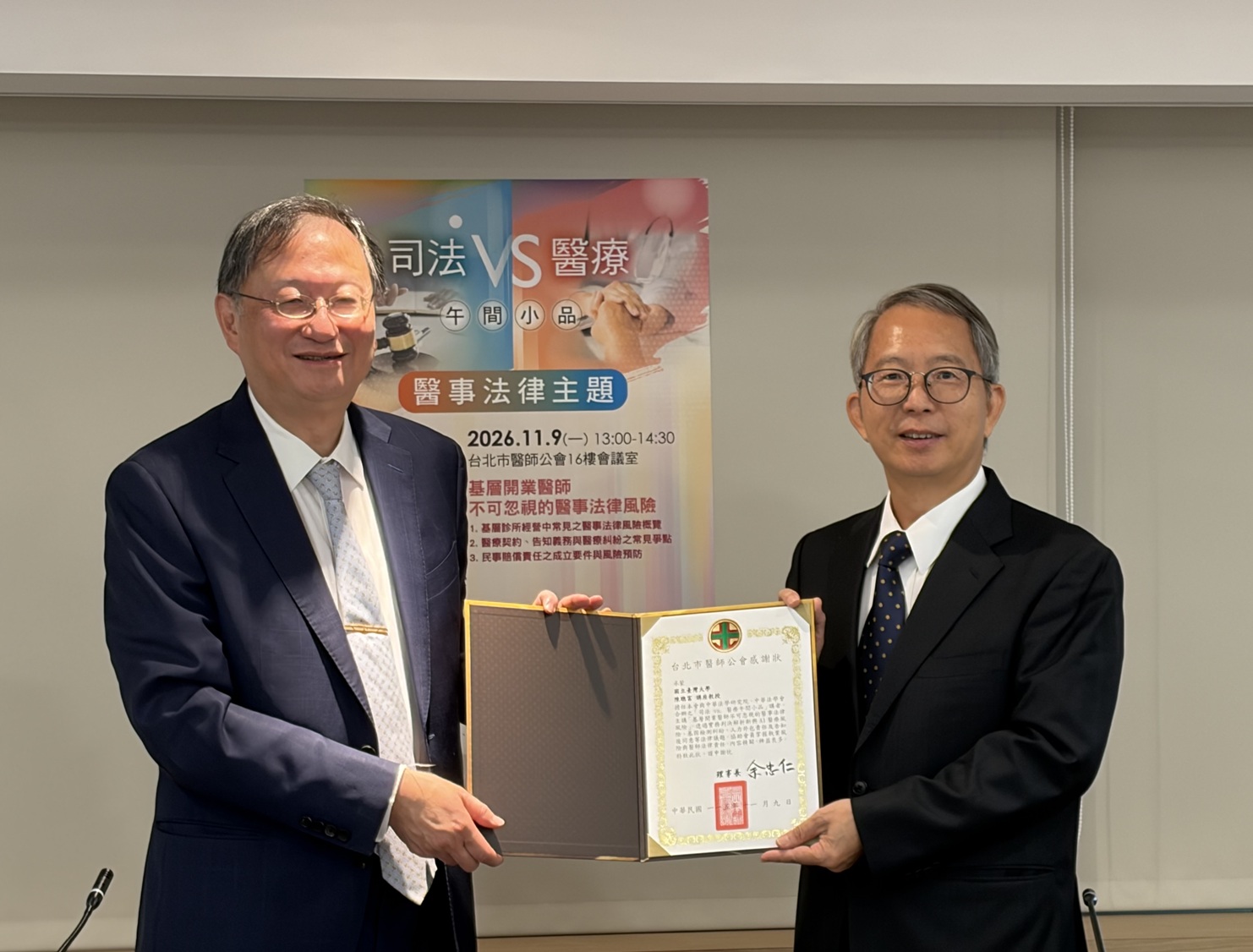
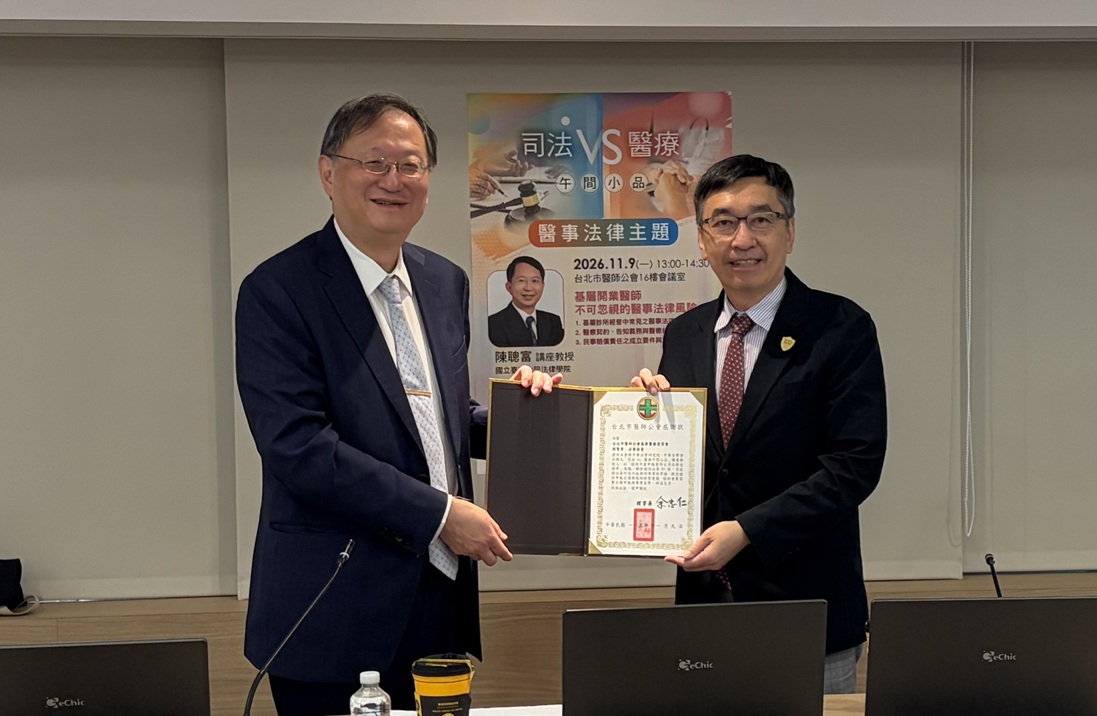
After the remarks, the Taipei Medical Association presented certificates of appreciation to President Wu Ming-Tzu, Distinguished Chair Professor Chen Tsung-Fu and Executive Director Chou Hsien-Chang, and the distinguished guests posed for a group photo.
Key Points of the Lecture
Professor Chen began by sharing that while preparing the talk, he had asked an AI tool about the topic. The AI not only gave an answer but also added, on its own, that the answer came from Professor Chen himself, which was not the case. This shows that AI answers still need careful verification. He made three main points.
- Risks that AI in medicine brings to primary care institutions
Professor Chen noted that at this stage AI remains an assistive tool, and physicians still bear responsibility for final decisions and oversight. Whether a physician blindly follows or rejects an AI's assessment, the legal standard remains the level of care expected of a reasonably qualified and diligent physician. Informing patients in advance that AI is being used does not by itself relieve the physician of liability. When using public AI tools, physicians should avoid entering any personal data that could directly or indirectly identify a patient.
- Liability for outsourced testing and staffing
Professor Chen illustrated this point with two cases, one involving an error in genetic testing and one involving outsourced hospital staff. A medical institution that entrusts testing, specimen transport or staffing to others is not thereby relieved of liability. When outsourced personnel make mistakes while working within the institution, the institution may also be held jointly liable.
- Informed consent
Professor Chen explained that the physician bears the burden of proving that the duty to inform and explain has been fulfilled. It is therefore advisable to record these explanations in detail in medical and nursing records. He also introduced the courts' views on informed consent in criminal cases.
Discussant's Remarks
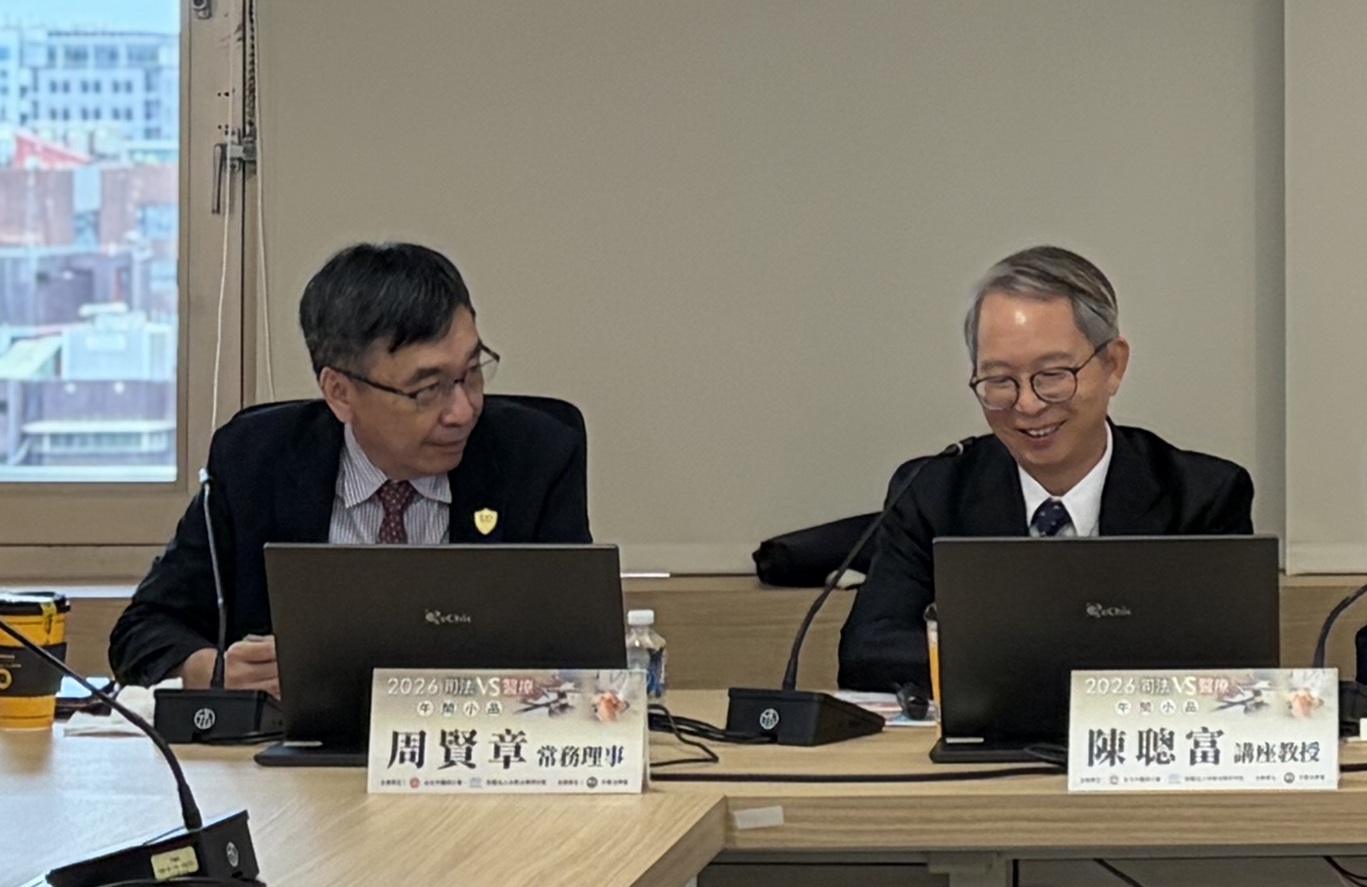
Speaking on "Standards for Referring Improper NHI Claims to Judicial Authorities," Dr. Chou Hsien-Chang explained that on May 24, 2023, the National Health Insurance Administration issued guidelines under Article 81 of the National Health Insurance Act on referring cases to judicial authorities. The guidelines adopt a tiered approach, with criminal penalties as a last resort:
|
Severity |
Handling |
Notes |
|---|---|---|
|
Minor or unintentional |
Administrative measures |
Handled through administrative measures; not referred for prosecution. |
|
Serious |
Referral to judicial authorities |
Referral applies to five types of conduct: 1. Harboring unlicensed medical practitioners 2. Providing items that are not medically necessary 3. Fabricating medical services 4. Filing claims under another person's identity 5. Repeat offenses |
Dr. Chou Hsien-Chang reminded physicians to check medical records before filing, to file claims only for services actually provided, and to correct any errors they find on their own initiative.
Open Discussion
During the open discussion, participants on site and online asked about situations common in primary care clinics, such as informed consent and family members collecting medication on a patient's behalf. Both speakers answered each question.
Conclusion
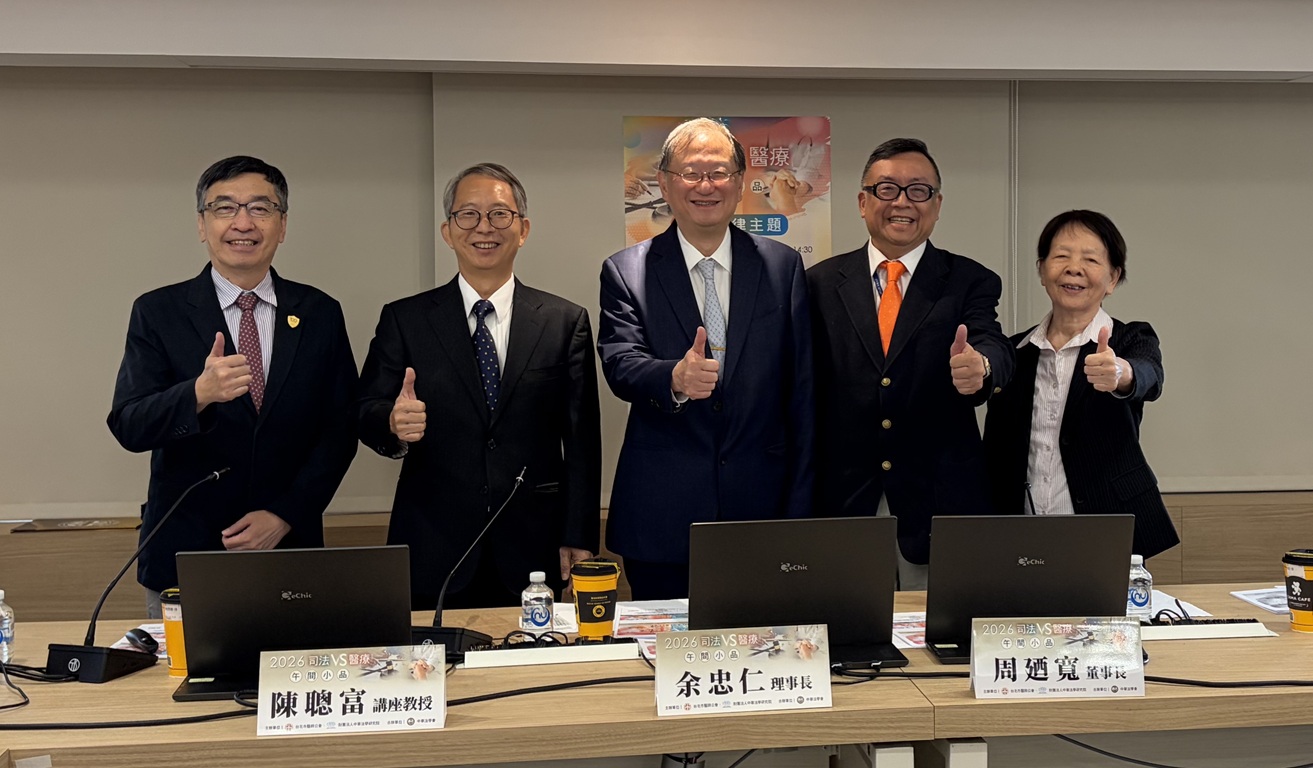
Held on the eve of Physicians' Day, this seminar brought the 2026 "Law vs. Medicine" lunchtime series to a successful close. Legal risks are often hidden in the everyday practice of primary care physicians. Understanding what the law requires allows physicians to care for their patients while also protecting themselves. The speakers' practical reminders are summarized below:
|
Issue |
Practical Reminder |
|---|---|
|
AI in medicine |
Verify AI answers carefully; final decisions remain with the physician. Do not enter data that could identify a patient into public AI tools. |
|
Outsourced testing and staffing |
Entrusting testing, transport or staffing to others does not relieve the medical institution of liability. |
|
Informed consent |
The physician bears the burden of proof; record the explanations given in detail in medical and nursing records. |
|
NHI claims |
Check medical records before filing, file only for services actually provided, and correct errors on your own initiative. |
Further Reading
- 【Law vs. Medicine】Legal Lecture – Legal Liability and Risk Management of AI-Assisted Diagnosis in Clinical Decision-Making
- 【Law vs. Medicine】Legal Lecture – Strengthening Medical Record Management and Legal Awareness
- 【Law vs. Medicine】Legal Lecture – NHI Fraud: Identifying Common Types of Improper Claims
- 【Law vs. Medicine】Legal Lecture – Common Tax Issues for Practicing Physicians
This English version was prepared with the assistance of AI. Please refer to the Chinese text for accuracy.
------------------------------
Referenced Laws
- Medical Care Act (Articles 63, 64, 67, 68, 81 and 82: consent to surgery and invasive procedures, medical records, duty to inform, duty of care and liability)
- Personal Data Protection Act (Article 6: sensitive personal data, including medical records)
- Civil Code (Article 188: employer's joint liability; Article 224: liability for agents and assistants)
- National Health Insurance Act (Article 81: fines for improperly obtained benefits or claims)
※ All links lead to the Laws & Regulations Database of the R.O.C. (Taiwan), which may be updated with some delay, and English translations may lag behind the Chinese text. The latest version of the law currently in force shall prevail.
------------------------------
Zusammenfassung
【Recht vs. Medizin – Rechtsvortrag: Rechtliche Risiken für niedergelassene Ärztinnen und Ärzte】
Am 9. November 2026 veranstalteten die Taipei Medical Association und die Chung-Hua Institution for Legal Research (die Stiftung) mit Unterstützung der Chinese Society of Law das vierte medizinrechtliche Mittagsseminar der Reihe „Recht vs. Medizin“; es war zugleich die letzte Veranstaltung des Jahres 2026. Es referierte Prof. Chen Tsung-Fu von der Juristischen Fakultät der National Taiwan University; als Diskutant wirkte Dr. Chou Hsien-Chang von der Taipei Medical Association mit, die Moderation übernahm Dr. Chou Nai-Kuan, Vorsitzender der Stiftung.
Prof. Chen betonte, dass KI derzeit nur ein Hilfsmittel sei und die letzte Entscheidung und Aufsicht bei der Ärztin oder dem Arzt verblieben. Medizinische Einrichtungen seien auch bei ausgelagerten Labor- und Personalleistungen nicht von der Haftung befreit, und die Beweislast für die ordnungsgemäße Aufklärung liege bei der Ärzteschaft. Dr. Chou Hsien-Chang erläuterte die seit 2023 geltenden Grundsätze, nach denen nur schwerwiegende Fälle unzulässiger Abrechnungen bei der Krankenversicherung an die Justiz weitergeleitet werden. Die Veranstaltung endete mit einer Fragerunde.
Diese Zusammenfassung wurde mit Unterstützung von KI erstellt. Maßgeblich ist der chinesische Text.
------------------------------
要約
【司法vs.医療 司法講座 開業医が見落としてはならない医事法上のリスク】
2026年11月9日、台北市医師公会と財団法人中華法学研究院(以下「本法人」)は、中華法学会の協力を得て、「司法vs.医療ランチタイム講座」医事法シリーズ第4回を開催しました。本講座は2026年度シリーズの最終回となりました。台湾大学法律学院の陳聰富講座教授を講師に、台北市医師公会の周賢章常務理事をコメンテーターにお迎えし、本法人の周迺寛董事長が司会を務めました。
陳教授は、AIは現段階ではあくまで補助的なツールであり、最終的な判断と監督の責任は医師にあると述べました。また、検査や人員を外部に委託しても医療機関の責任は免れないこと、説明義務を果たしたことの立証責任は医師にあることを説明しました。周常務理事は、2023年に定められた原則により、健康保険の不当請求のうち重大な事案のみが司法機関に移送されることを紹介しました。講座の最後には質疑応答が行われました。
本要約は AI の支援を受けて作成したものです。正確な内容については中国語の本文をご参照ください。